
Graham McTavish
Korris and Opiter find love on the battlefield of Spartacus
Wed. December 24, 2025 by Jerry Nunn


It's epic in the true sense of the word
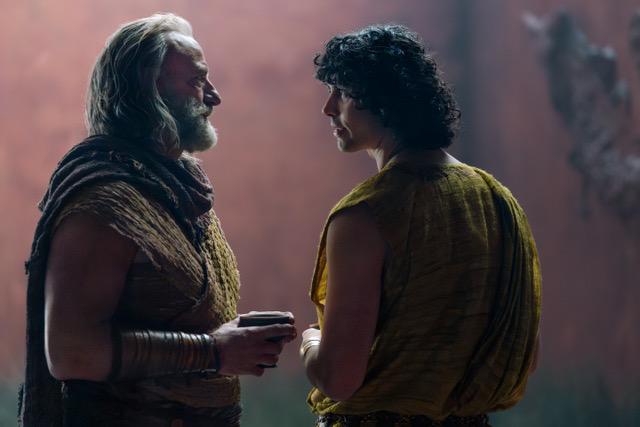
korris and opiter
House of Ashur raises the roof on same sex relationships
Spartacus was a real-life gladiator and leader who fought against Roman authority. His story has inspired works of fiction for decades and Starz Entertainment has produced several television series, starting with Spartacus in 2010.
Just in time for the holidays, the network is gifting its viewers a spinoff tale titled Spartacus: House of Ashur, which debuted on December 5. This unique sequel explores the possibility of what would have happened if Ashur had not died in the second season of Spartacus.
For House of Ashur’s inaugural season, the story surrounds a gladiator school and a female fighter named Achillia. Nick E. Tarabay plays the lead character Ashur and Graham McTavish portrays Korris, his right-hand man.
Themes covered on the show include sex, war and societal norms. Actor Arlo Gibson is Opiter, a scheming individual with his sights set on Korris.
Scottish performer McTavish is no stranger to the fantasy world, with roles in The Hobbit films, AMC’s Preacher and has worked with Starz previously in Outlander.
New Zealand native Arlo Gibson worked on Prime’s The Brokenwood Mysteries this year and appeared on Spartacus: War of the Damned as Adal in 2012.
The duo zoomed in from an island to talk about their onscreen love story inside the House of Ashur.
JN: (Jerry Nunn) Where are you calling in from?
AG: (Arlo Gibson) We are both in New Zealand.
JN: What time is there?
GM: (Graham McTavish) A quarter to nine in the morning, so not too bad.
JN: I watched the Spartacus episodes you were in over the weekend and you both did a wonderful job. Did either of you have theatrical training, such as Shakespeare, to make the dialogue of Spartacus easier?
AG: Absolutely. I came up working in theater in shows such as King Lear. I am a huge fan of Shakespeare. It certainly helped in this world with the cadence of the language and the way Shakespeare is structured. They really give each other a hand.
GM: I mainly did theater in the first 20 years of my career. I performed Shakespeare at university. That was my training to work in plays containing big issues and discussions that Shakespeare was so good at having.
There are echoes of Shakespeare in all of this. There’s a bit of Macbeth, Hamlet and Titus Andronicus. It’s all there and it’s great for that reason.
JN: The set looks amazing. Is it realistic-looking or a major amount of green screen?
GM: The sets were all real. It was only the deep background that was CGI, such as the view off the cliff. Everything else was a physical set.
AG: The house was two stories of details and magnificent.
GM: When you would walk down the market streets, there were donkeys and real food. It was great and really made our jobs a lot easier when we worked in that real environment.
AG: One time, I had an entire charcuterie board that was refreshed between takes.
GM: Oh, really? I never had one.
AG: I think it was yours and I was just eating some of it…
GM: Oh no, Korris is a stranger to charcuterie. (Both laugh)
JN: How did you both approach these queer characters?
GM: The way I approached the character was just a person in love and that’s it. I really did. We did spend a lot of time talking about this and we had meetings.
As a film and television actor, I have never even had a cuddle, let alone a kiss. “Oh, Graham is in this? Well, nothing for him then.”
Onstage, it was different. For me, my approach to it was to mine the relationship of two people who shouldn’t be getting together in the world we live in. Correct me if I’m wrong, Arlo, but in the Roman world, it was okay for gay relationships to be between free men and slaves, but not between two free men. That was frowned upon, so what they were doing was something very dangerous in the Roman world.
We wanted to explore the reality of the relationship and also find the pacing of that relationship with marker points. Anyone who has been in a situation of finding themselves falling in love with somebody has moments of surprise and doubt, possibly fear about whether the other person feels the same. I wanted to find those points while playing out those scenes that we did together.
AG: In terms of Opitur, he’s a character who is more comfortable with his sexuality and sex in general. It’s a service he’s providing and he’s a man of absolute indulgence.
In the beginning, Korris and Opitur are positioned to extract things from each other. There are things they want from the other one. What is beautiful about the arc of the relationship is that the need for something in return falls away. What is left is genuine love for each other. What blossoms is a beautiful romance between them, built on mutual respect and trust, which I think is so rare in Capua.
JN: The series gives your characters a chance to show layers and different sides to a warrior. Did you enjoy that part of it?
GM: Yes. Arlo makes a good point that his character is much more associated with indulgence and success, whereas Korris lives a Spartan existence of self-denial. He doesn’t make friends because that’s dangerous and they die. He lives alone in a cell. He has a functioning business relationship with Ashur, but not much beyond that. He’s a closed person. For him to come out in this way as a loving individual was fascinating to explore.
JN: I am hoping that Graham has a happy ending, but there are more episodes to go.
GM: That was interesting because this couple saw a happy ending for themselves. This world is like a game of chess and sometimes you don’t realize who you are playing chess with until the moment when they checkmate you. That’s how dangerous it is.
JN: Lucy Lawless has a huge following in the LGBTQ+ community. Did you interact with her during her time on set?
GM: I didn’t, but I saw her on the set. Weirdly, I did a show with Lucy this year called My Life Is Murder.
AG: I did that show, too.
GM: I saw that. I had interaction subsequently and she’s a lovely woman. I had a great time with her.
AG: I only met her briefly in passing, but my mother choreographed a lot of the dance sequences on Xena, so they worked together really closely. It was nice to say hi to her because I remember her when she was a little kid.
JN: What would you tell people to get them to watch Spartacus: House of Ashur?
GM: There is never a dull moment on the show. With other TV shows, there is fat on them and there are bits they could have cut. With Spartacus, it’s packed with everything imaginable. In our case, it is packed with the most tender relationship in the show.
I am proud of that and the way love was portrayed on the series.
AG: Me too. It stands apart from all of the other dynamics that are occurring within the show. I would agree with Graham. This show is so captivating and you can’t look away.
It’s so exciting to finally see it all put together. Everyone in every department is working at the top of their game. It’s a really intriguing world and fascinating story that I think will keep everyone coming back for more.
GM: It’s epic in the true sense of the word. To go back to the Shakespearean discussion we were having at the beginning, it’s a combination of Shakespeare and Conan the Barbarian. It’s a wild world of limitless possibilities.
It allows Steven S. DeKnight and the other writers to create great stuff that this world allows.
JN: I love a Conan the Barbarian reference! When are you coming to Chicago?
GM: I haven’t been to Chicago for years.
AG: I have never been to Chicago, so I should book that ticket right away.
GM: Actually, you can fly directly to Chicago from New Zealand.
AG: Fantastic. Thanks for the advice.
GM: You are welcome!
New episodes of Spartacus: House of Ashur stream on Starz every Friday until February 6, 2026.
Interviewed by Jerry Nunn. Jerry Nunn is a contributing writer to the GoPride Network. His work is also featured in Windy City Times, Nightspots Magazine and syndicated nationally. Follow @jerrynunn