
Sean Bell
Sean Bell Finds the Joy and the Jitters in Spamalot’s Sir Robin
Sat. May 16, 2026 by Matt Inawat, GoPride


If audiences can walk away with a little bit more levity and a lightness in their step, I think that's the goal of the show.

sean bell
Sean Bell on Bringing Camp, Comedy, and Heart to Spamalot
There are some roles that arrive with their own mythology. In Spamalot, Sir Robin is one of them: the knight defined by fear, comic timing, and one of musical theater's most beloved numbers, "You Won't Succeed on Broadway." But for Sean Bell, stepping into the role on the national tour was never just about recreating a familiar laugh. It was about finding the humanity inside the absurdity.
As Spamalot heads back to Chicago, where the show first premiered before becoming a Broadway hit, Bell is keenly aware of the role's lineage. David Hyde Pierce originated Sir Robin on Broadway, and Michael Urie brought his own spark to the recent revival. Bell sees himself somewhere in between.
"I've heard Michael described as kind of a live wire, and David is much more reserved in his comedy," Bell told GoPride. "I think it was my goal to find a medium between the two and also just to play and have fun and discover what my own version of it was."
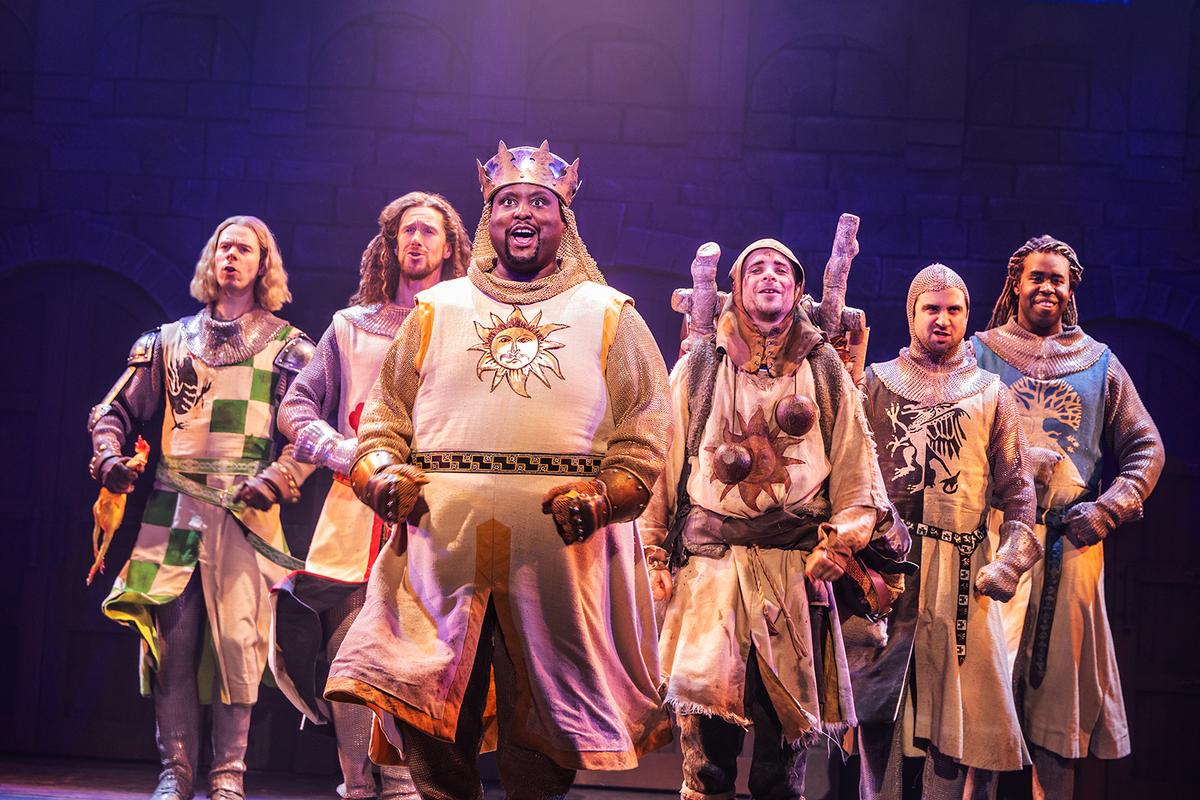
 Sean Bell and Ensemble in the North American Tour; SPAMALOT; credit: Matthew Murphy and Evan Zimmerman
That process, he said, did not happen in isolation. His version of Robin took shape in rehearsal, in conversation with director Josh Rhodes and in the give-and-take of ensemble comedy. One note in particular helped unlock the character: lean into the cowardice early. Bell said Rhodes encouraged him to "sprinkle in as many little moments of cowardice and jumpiness" as possible, a choice that helps establish Robin's comic identity while also setting up a fuller emotional arc.
That arc matters to Bell. Beneath the panic and punchlines, he sees Robin as a character who eventually discovers confidence, purpose, and delight. In Bell's telling, the role is not just about being the scared knight. It's about watching someone stumble into joy.
Bell approached the part with both reverence and discipline. Because the material is so iconic, he had to resist the instinct to imitate what had already worked. "My job was to trust that I knew what they had done and what they had brought to it, then forget it a little bit and just play around in the rehearsal room and see organically what came of my version of Robin," he said.
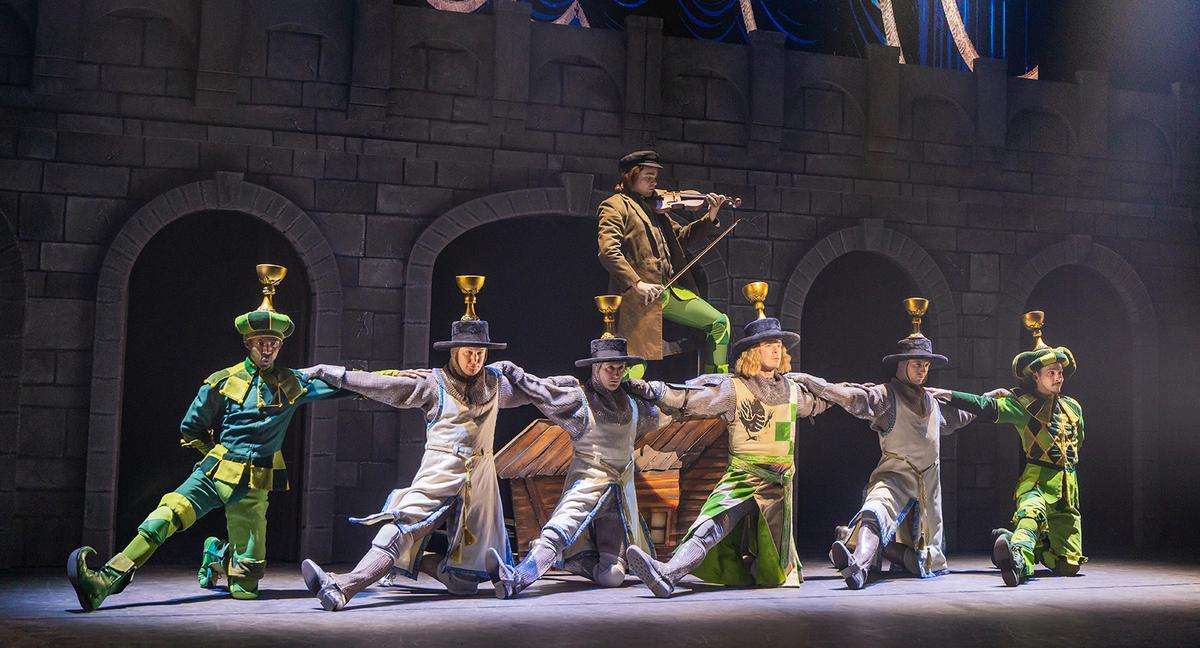
 North American Tour of SPAMALOT; credit: Matthew Murphy and Evan Zimmerman
That self-trust seems to come from a performer who has recently tested himself on bigger stages. Bell made his Broadway debut in Harmony and said the experiences that followed left him feeling "a little bit more grounded and certainly more confident" in what he brings to the table. He described the pressure of developing new work at a high level, and the strange gift of surviving those moments. Once you've done it, he suggested, you stop wondering if you can.
That confidence helps in a show like Spamalot, whose comic rhythm depends not just on the material, but on the room. Bell said one of the most fascinating parts of touring has been learning how much audience response changes from city to city. Some houses are so large that laughs land differently. Some crowds have a quicker relationship to the material. Every stop requires recalibration.
"It's been a matter of trying to balance that dry humor with musical theater comedy and adjusting it for the large houses that we're playing," Bell said. "It's challenging, but it's a really fun challenge."
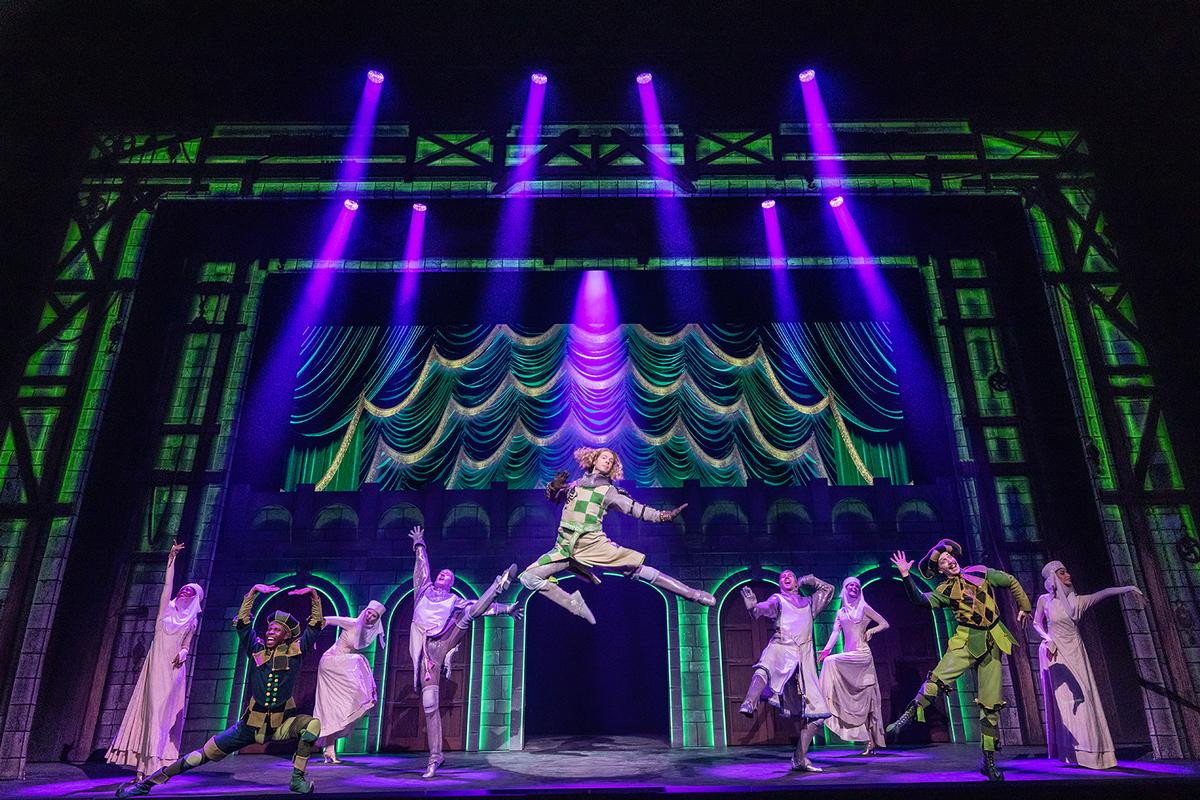
 Sean Bell and Ensemble in the North American Tour, SPAMALOT; credit: Matthew Murphy and Evan Zimmerman
That balancing act feels especially rich in a show with such obvious camp DNA. For LGBTQ+ audiences, camp is often more than a style. It is a sensibility, a coded language, and sometimes a form of recognition. Bell feels that in Spamalot very clearly.
"Spamalot has so many elements of camp and queer humor and acknowledgement of queer identity," he said. "The campiness of it, the musical theater of it all, just makes it sort of inherently queer."
He pointed in particular to the musical's coming-out storyline, which does not exist in Monty Python and the Holy Grail and can catch movie fans off guard. Bell said those surprises often produce some of the show's most joyful audience reactions, especially at LGBTQ+ nights. "They go crazy for the coming out story," he said. "It's really a joy."
That sense of joy is also what Bell hopes audiences carry with them after the curtain comes down. Spamalot ends with a reprise of "Always Look on the Bright Side of Life," and Bell sees that not as a throwaway finale, but as the show's emotional thesis. In an era when many people arrive at the theater carrying anxiety, fatigue, or worse, he believes the value of levity is real.
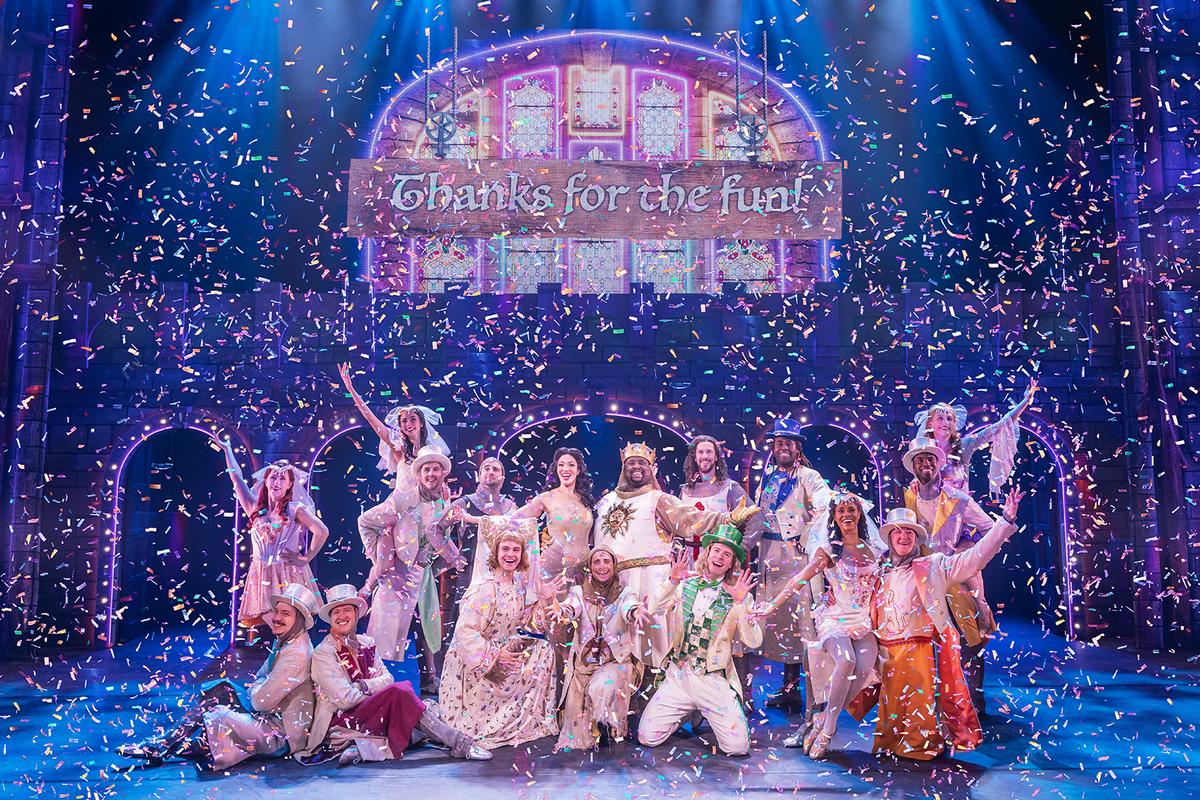
 The cast of the North American Tour of SPAMALOT; credit: Matthew Murphy and Evan Zimmerman
"If audiences can walk away with a little bit more levity and a lightness in their step, I think that's the goal of the show," Bell said.
It is also, perhaps, the lesson he has taken from Robin himself. Asked what life advice the character would give him, Bell answered with a line that feels as useful offstage as on: "Keep finding the joy in it and remember how lucky you are."
With Bell bringing both comic precision and real warmth to Sir Robin, Spamalot returns to Chicago not as a museum piece, but as a still-lively reminder of how smart silliness can be. The musical plays Broadway In Chicago's CIBC Theatre, 18 W. Monroe St., from May 19 through May 31. Nearly two decades after first launching in Chicago, this gleefully ridiculous grail quest still knows how to surprise an audience and send them home singing.
----------
Ticket Information
Individual tickets for SPAMALOT are on sale now and range from $35.00 - $135.00 with a select number of premium tickets available. Ticket price listed is when purchased in person at the box office. Additional fees apply for online purchases. For more information, visit www.broadwayinchicago.com.
About Broadway in Chicago
Broadway In Chicago was created in July 2000 and over the past 26 years has grown to be one of the largest commercial touring homes in the country. A Nederlander Presentation, Broadway In Chicago lights up the Chicago Theater District entertaining up to 1.7 million people annually in five theatres. Broadway In Chicago presents a full range of entertainment, including musicals and plays, on the stages of five of the finest theatres in Chicago’s Loop including the Cadillac Palace Theatre, CIBC Theatre, James M. Nederlander Theatre, The Auditorium, and just off the Magnificent Mile, the Broadway Playhouse at Water Tower Place.
Interviewed by Matt Inawat, GoPride