
Gus Van Sant
Gus Van Sant walks a tight rope for Dead Man’s Wire
Tue. January 6, 2026 by Jerry Nunn


There were gay film festivals in the early ‘80s, but I was formulating a plan.
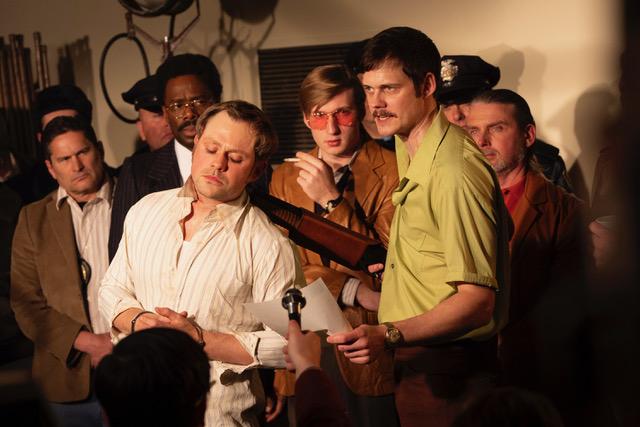
dead man's wire cast
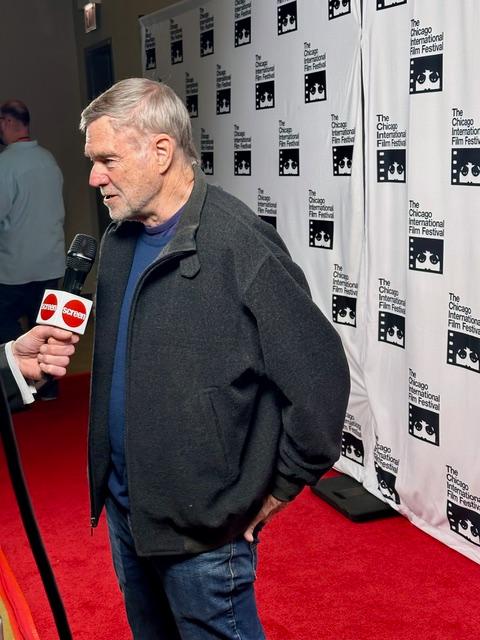
Hanging with Gus Van Sant for Dead Man’s Wire
The legendary director Gus Van Sant has carved out a massive career over the years and he slices into 2026 with Dead Man’s Wire. He brought his latest project into the Windy City in October of 2026 for an early screening at the Chicago International Film Festival.
From Row K Entertainment, Wire is the film adaptation of Dead Man’s Line, a 2018 documentary about Tony Kiritsis holding a hostage in Indianapolis. Bill Skarsgard tackles the lead role with gusto and humanizes Tony while hitting all the right notes.
The film was shot in Louisville, Kentucky, the birthplace of Gus Green Van Sant Jr. His career began with an indie film, Mala Noche, in 1985 and then landed a string of hits with Drugstore Cowboy, My Own Private Idaho and To Die For. The out and proud producer explored the LGBTQ+ community in his own unique way with Milk, Even Cowgirls Get the Blues and Feud: Capote vs. The Swans.
He talked about his catalogue of work and the challenges of Dead Man’s Wire while in town recently.
Jerry Nunn: I went to college at Western Kentucky University and I saw you are from there.
Gus Van Sant: I was born in Kentucky and spent the summers there growing up.
JN: Dead Man’s Wire is a straight man project, isn’t it?
GVS: Yes, but when we shot the scene where things become personal, Bill Skarsgard said, “I think we just outed Tony Kiritsis.”
JN: Bill’s delivery reminded me of Michael Shannon.
GVS: He is similar to a lot of people, like Nick Cave and I can see Michael Shannon too.
JN: I have gotten to know Colman Domingo, who plays Fred Heckman, through interviews. How was working with him?
GVS: He’s a really fun person. He was asked a question by somebody and he mentioned wanting to be like Al Green and have a great day every day. It is his motto.
JN: He had a great radio voice for the film.
GVS: That’s true.
JN: What draws you to a true story project like this?
GVS: I have done a lot of projects that were based on events that have really happened. I usually find out about them from a book. They each have different histories; sometimes they are based on real people and there was never a book about them.
I am not usually looking for something that really happened, though. Dead Man’s Wire happened because I ran into a producer at Soho House and he wanted to send me a project that he was having trouble with. It had to be shot by the end of the year and this was September, so about a year ago. We shot it in November, which I liked because we had to start shooting right away. It almost always takes planning for a year and it can get boring. The idea of moving fast was really appealing and it would be filmed in Louisville, Kentucky. The real story is set in Indianapolis. Part of the money and financing was coming from Louisville.
So the attraction was there and then I read the story. There was a site to click on that would drive over to YouTube as people read the digital copy of the story. It had his original call to 911 and you can hear the real Tony manically cracking jokes at the same time he has a man at the end of a shotgun, so there was anger mixed with humor at the same time. He was so interesting that it sold me. The rest of the screenplay was well put together, too.
JN: You have brought many true stories to light that people might not know about, such as those in Milk.
GVS: Yes, forgotten characters have been important in my work.
JN: Is there a queer person you would still like to cover?
GVS: I did the Truman Capote series, Feud: Capote vs. The Swans. I knew about him having lunch with the women in New York and him being cast out to have a fall from grace. Ryan Murphy wanted to make it so it was a bit preordained.
Mala Noche was my first queer project and it was a rarity. The story came from a friend of mine in Portland who was acting in a low-budget film where I was the sound man. His name was Walter Curtis and he was a local poet. He was very loud and sort of like a Socrates [laughs]. He would talk to people on the street and always find someone to talk to. I remember going into the gay bar with him and getting thrown out, more or less, because we didn’t fit the paradigm of gay people. There were a few other gay bars in Portland where we didn’t get kicked out. Walt was antagonizing everyone all the time. He had written a novel, so I was very attracted to telling his story and sharing his experiences.
There were gay film festivals in the early ‘80s, but I was formulating a plan. I had made a film in the ’70s called Alice in Hollywood, which never saw the light of day. I went to the Vista Theater in LA and it was kind of a gay theater in its own way. It is in the neighborhood, which is Silverlake now and owned by Quentin Tarantino. There was a gay week of programming, like a gay film festival. Half of the films were from places like Sweden, Denmark, Holland, Spain and Italy. That was it. There were old Hollywood films from Tennessee Williams, like Suddenly, Last Summer, but there wasn’t much representation from the United States. It made me think about it being open territory for US cinema. After making Mala Noche, it went to Berlin, where all gay movies go. That year, I didn’t get into Sundance because they had Parting Glances as a gay film and Desert Hearts as a lesbian film.
JN: So there was a limit?
GVS: Back then, there was, but there isn’t one now. Right now, cinema isn’t hurting for gay stories.
JN: I work with the Reeling LGBTQ+ Film Festival in Chicago. Can you make a gay movie to be in the next upcoming festival?
GVS: Usually, I am drawn by the characters in the story. The Milk movie was an easy one because Harvey was such an illustrious character.
JN: Do you hear from the LGBTQ+ community about your work?
GVS: It depends on where I am. I live partly in Palm Springs and it’s a big gay neighborhood. I am more known for my gay films than my straight films.
JN: Has an actor that you have worked with surprised you in the amount of fame they received later in their careers? Possibly Keanu Reeves?
GVS: Keanu was in a few films already before he was in My Own Private Idaho, like Bill & Ted’s Excellent Adventure. River Phoenix had been nominated for an Oscar for Running on Empty. Both of them were very bankable and already big stars. It turned our little film into a bigger project when it was meant to be something smaller.
I was going to cast unknowns, but we checked with them and that changed the profile of the film. It was the opposite effect and they got the film financed just by their names.
JN: What about Good Will Hunting?
GVS: They were not well known, but had done a few things like Geronimo, where Matt Damon had a strong part and Ben Affleck had been in Richard Linklater’s Dazed and Confused.
Matt and Ben had a hard time getting their momentum going because it had to be made with them starring in it. That was a given because no matter who waved money at them, they would decline. I was overshadowed by other people for the project and they ended up coming back to me, which was amazing.
That was a case when, yes, they were unknowns and I liked that fact. Since it happened that way for me, it was a benefit, not a detriment. To alleviate it Robin Williams liked the script and was a strong ally, while still being a really big star to counteract the unknowns in the media world.
Dead Man’s Wire bolts into Chicago theaters on January 9 and nationwide on January 16.
Interviewed by Jerry Nunn. Jerry Nunn is a contributing writer to the GoPride Network. His work is also featured in Windy City Times, Nightspots Magazine and syndicated nationally. Follow @jerrynunn