
Outspoken: Archy Jamjun on growing up, letting go of fear, and finding his people
Thu. September 10, 2026 10:43 PM by GoPride.com News Staff


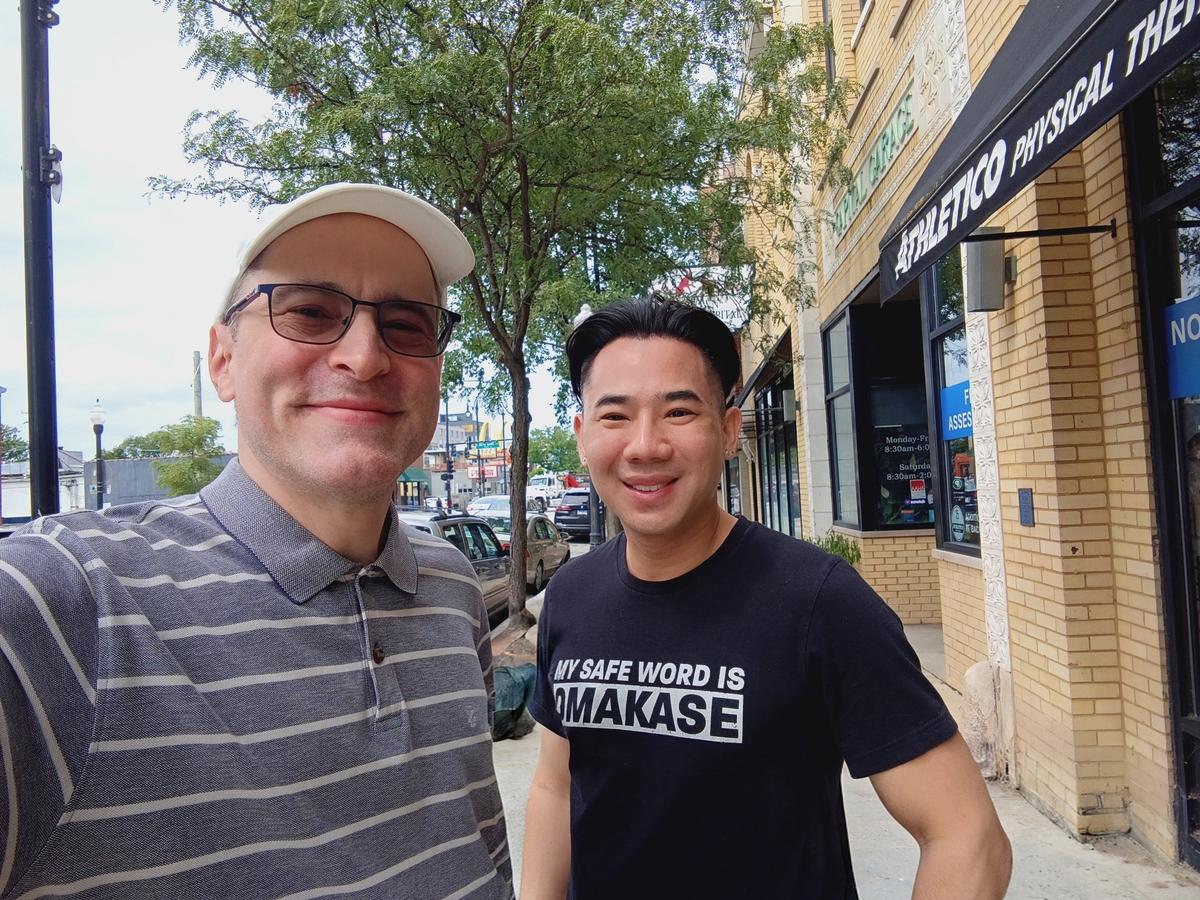
photo credit // michael oboza
Give Them Their Flowers is a series by Michael Oboza featuring mini profiles of regular people in the LGBTQ community
CHICAGO, ILL. -
By Michael Oboza, Special to GoPride.com
During my final year as a volunteer photojournalist, I set out with a clear mission: to spotlight the extraordinary people shaping our intersectional LGBTQ community.
Few embody the spark that Archy Jamjun carries with him into projects. A two-time Moth GrandSLAM winner, curator and co-founder of Chicago’s premier monthly LGBTQ Outspoken storytelling series, Jamjun has spent years helping others find their voices. Sitting down to share his own story, he looked back on the long, winding road that brought him to this point.
Like many queer youth, Jamjun first had to confront the friction between his emerging desires and the pressures of fitting in.
"I knew I was gay but I also had girlfriends that I truly felt I was attracted to and loved. I kept trying to convince myself that it was a phase or that it was normal for straight men to be attracted to men as well. I mean it is, it's just called being bisexual," Jamjun said. "I'd be intimate with my girlfriends while thinking of men so it was hard not to think something was wrong and I'd have extreme crushes on guys that felt much more sexually intense than what I felt for my girlfriends."
Navigating social circles at school only heightened that vulnerability, leading to an anxiety that lingered long past adolescence.
"I was also really scared of guys because I thought if I befriended them they would figure out I was gay so all my friends were girls which ironically, made me seem even gayer," he recalled. "Although, one of my teachers thought I was a 'ladies' man,' a phrase that scared my immigrant mother because she interpreted it as trans. That's something that stuck with me for a while, a fear of straight men."
Coming out brought relief, but self-discovery proved to be an evolving process layered with familial expectations and unresolved shame.
"It began a long road of figuring out who I am, something that I think continues for people their whole lives, everyone just does it at different speeds at different times and perhaps some people get further than others," Jamjun said. "I fell into a mix of joy for finally pursuing what I wanted (men) and feeling like a disappointment to my parents. Even though they were pretty accepting of my homosexuality, I felt that because I wouldn't have a wife and kids, nothing I ever did would make them as happy as my sister who had a husband and two kids. In essence, though they loved me, I still felt like some sort of failure. Looking back, there was a period of time I sought pleasure to cover this pain instead of looking for other ways I could achieve and grow other parts of my identity."
The turning point came when Jamjun stepped out of isolation and began connecting with a wider, intergenerational circle of queer peers.
"I wish I had tried to make friends with older LGBTQIA people. I didn't start doing that til my late twenties and it turned out to be so helpful," he said. "I joined a writing group called New Town Fiction writers and it was the first time I interacted with LGBTQ people in a non-sexual or party manner and it really started me on the path to finding out who I was and what I had to give outside of sex and partying."
That shift in perspective not only deepened his personal sense of belonging, but also laid the groundwork for his storytelling career and his ongoing contributions to Chicago's cultural scene.
"Being LGBTQ affects so much more than your sexuality and the sooner you can find that out and map how it has affected you, the sooner you can start enjoying and reckoning with who you are," Jamjun said. "I also think learning LGBTQ history helps you realize how many strong leaders our community has had and can make you feel less alone and inspire you."
During my final year as a volunteer photojournalist, I set out with a clear mission: to spotlight the extraordinary people shaping our intersectional LGBTQ community.
Few embody the spark that Archy Jamjun carries with him into projects. A two-time Moth GrandSLAM winner, curator and co-founder of Chicago’s premier monthly LGBTQ Outspoken storytelling series, Jamjun has spent years helping others find their voices. Sitting down to share his own story, he looked back on the long, winding road that brought him to this point.
Like many queer youth, Jamjun first had to confront the friction between his emerging desires and the pressures of fitting in.
"I knew I was gay but I also had girlfriends that I truly felt I was attracted to and loved. I kept trying to convince myself that it was a phase or that it was normal for straight men to be attracted to men as well. I mean it is, it's just called being bisexual," Jamjun said. "I'd be intimate with my girlfriends while thinking of men so it was hard not to think something was wrong and I'd have extreme crushes on guys that felt much more sexually intense than what I felt for my girlfriends."
Navigating social circles at school only heightened that vulnerability, leading to an anxiety that lingered long past adolescence.
"I was also really scared of guys because I thought if I befriended them they would figure out I was gay so all my friends were girls which ironically, made me seem even gayer," he recalled. "Although, one of my teachers thought I was a 'ladies' man,' a phrase that scared my immigrant mother because she interpreted it as trans. That's something that stuck with me for a while, a fear of straight men."
Coming out brought relief, but self-discovery proved to be an evolving process layered with familial expectations and unresolved shame.
"It began a long road of figuring out who I am, something that I think continues for people their whole lives, everyone just does it at different speeds at different times and perhaps some people get further than others," Jamjun said. "I fell into a mix of joy for finally pursuing what I wanted (men) and feeling like a disappointment to my parents. Even though they were pretty accepting of my homosexuality, I felt that because I wouldn't have a wife and kids, nothing I ever did would make them as happy as my sister who had a husband and two kids. In essence, though they loved me, I still felt like some sort of failure. Looking back, there was a period of time I sought pleasure to cover this pain instead of looking for other ways I could achieve and grow other parts of my identity."
The turning point came when Jamjun stepped out of isolation and began connecting with a wider, intergenerational circle of queer peers.
"I wish I had tried to make friends with older LGBTQIA people. I didn't start doing that til my late twenties and it turned out to be so helpful," he said. "I joined a writing group called New Town Fiction writers and it was the first time I interacted with LGBTQ people in a non-sexual or party manner and it really started me on the path to finding out who I was and what I had to give outside of sex and partying."
That shift in perspective not only deepened his personal sense of belonging, but also laid the groundwork for his storytelling career and his ongoing contributions to Chicago's cultural scene.
"Being LGBTQ affects so much more than your sexuality and the sooner you can find that out and map how it has affected you, the sooner you can start enjoying and reckoning with who you are," Jamjun said. "I also think learning LGBTQ history helps you realize how many strong leaders our community has had and can make you feel less alone and inspire you."