
From DAGMAR to ACT UP: Darrell Gordon's legacy of health care and housing advocacy
Tue. October 20, 2026 7:09 PM by GoPride.com News Staff


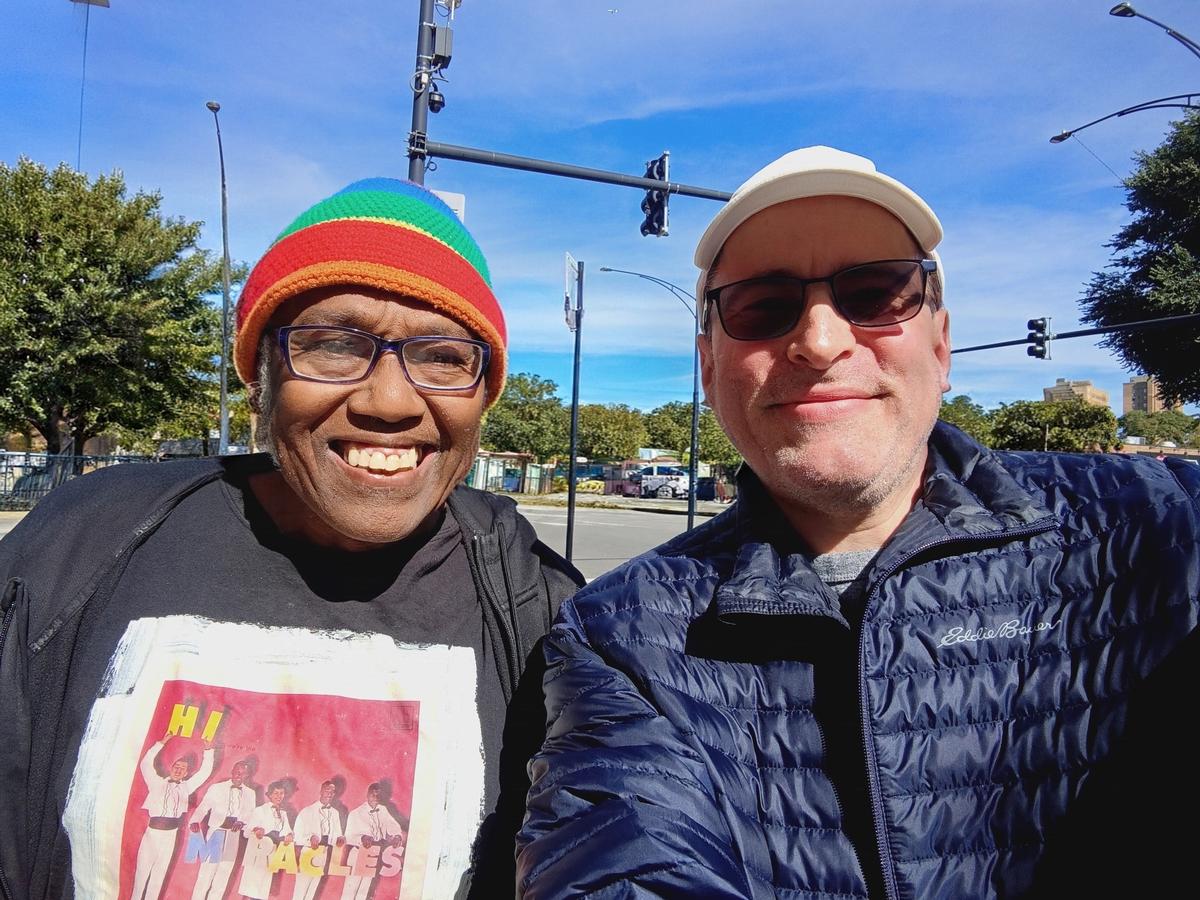
photo credit // michael oboza
Give Them Their Flowers is a series by Michael Oboza featuring mini profiles of regular people in the LGBTQ community
CHICAGO, ILL. -
By Michael Oboza, Special to GoPride.com
During my final year as a volunteer photojournalist, I made it my intentional mission to recognize everyday legends across our LGBTQ community.
I am grateful to help acknowledge an unsung legend who understood the visibility and importance of housing and health care for those dying from HIV and AIDS, when showing up and showing out became a framework for future intersectional generations to follow and continue making change.
Thank you, Darrell Gordon, for your time, wisdom, and legacy as a founding member of Dykes and Gay Men Against Racism and Repression (DAGMAR) in 1984, which became ACT UP Chicago in 1988, then a member of Queer Nation Chicago in the 1990s, as well as all of your intersectional history.
Reflecting on decades of community organizing, Darrell Gordon remembers the political landscape of Chicago long before he felt ready to step into his own truth.
"I was aware of what was going on in the West Side of Chicago in the 1960s. I met people and made friends when I was an activist with human rights and civil rights groups before I came out to others. I met people like myself, but I wasn't comfortable enough with myself to come out."
Coming out is part of a different struggle, one intertwined with the shifting tides of public safety and police presence at early demonstrations.
"My first Pride parade was in 1982 when the American Nazi Party threatened to attend and were blocked behind police barricades, letting the parade complete."
Legislative battles in the city required immense persistence, especially when initial attempts at securing civil rights protections fell short due to narrow scopes.
"I was not surprised after the gay rights bill was defeated in 1986 because it was based on singular issues and was not inclusive, as I previously suggested to anyone who would listen."
That setback only fueled the determination needed to forge lasting protections for marginalized Chicagoans.
"I fought to reconstruct the bill until it passed as the Human Rights Ordinance, making discrimination in housing, employment, health, and public accommodations regarding race, religion, gender, sexuality, and disability illegal in 1988."
As the HIV and AIDS epidemic devastated communities in the mid-1980s, Gordon stepped directly onto the front lines of medical advocacy and grassroots resistance.
"I attended my first political AIDS demonstration in 1986."
The crisis brought out both solidarity and severe reactionary stigma from local businesses.
"A food store at Belmont and Broadway called Evergreen called for the quarantine of people with AIDS and demanded them to wear AIDS ID bracelets."
Refusing to let such blatant discrimination go unanswered, activists mobilized immediately.
"As a member of the Solidarity Committee of the Anti-Imperialist Group, I decided to join with others to hold a peaceful picket in front of Evergreen."
The direct action proved effective against corporate prejudice.
"As a result of the picket, the owner of the store donated money to the AIDS community."
When state officials pushed harmful policies targeting vulnerable populations, Gordon and his fellow advocates answered with targeted civil disobedience.
"As I worked locally to coordinate the March on Washington, there was legislation for mandatory testing and quarantine for people with HIV. Advocates and myself planned a successful vigil and civil disobedience action at Gov. Jim Thompson’s home in 1987."
His coalition-building efforts also extended to national stages, where he consistently advocated for broader representation.
"I worked nationally for the March on Washington in 1993 when I suggested that the transgender movement wanted to be included, adding the T to the march for anyone who would listen."
The grueling work of movement-building was mirrored in the personal sacrifices made by countless organizers across the country.
"During work on both marches, many advocates worked on civil disobedience regarding health care and civil rights."
Amid the relentless pace of activism, personal healing and connection often arrived when least expected.
One of the best things about coming out was unexpected.
"On a rare night out, I went to the bars because I was sad about something. While not looking for anything, I met an author and educator who collected books like I did."
That chance encounter blossomed into a decades-long partnership rooted in shared passions.
"Dr. Thomas W. Sills became my partner until decades later when he passed away from COVID in 2020."
Today, the perspective carried forward by enduring organizers serves as a vital compass for contemporary movements.
Advice from a living intersectional legend is worth listening to.
"Get outside and keep up the work with folks of color, women, LGBTQ, and the working class."
The Call to action is underscored by a clear-eyed assessment of recent political history.
"Because we have taken steps forward and many steps backward."
To protect hard-won rights, Gordon stresses that community members must remain vigilant against complacency.
"We got complacent after marriage equality, and it is important to continue the fight for liberation and freedom."