
Aaron Sager talks about his Fil-Am coming out experience
Wed. July 8, 2026 7:09 PM by GoPride.com News Staff


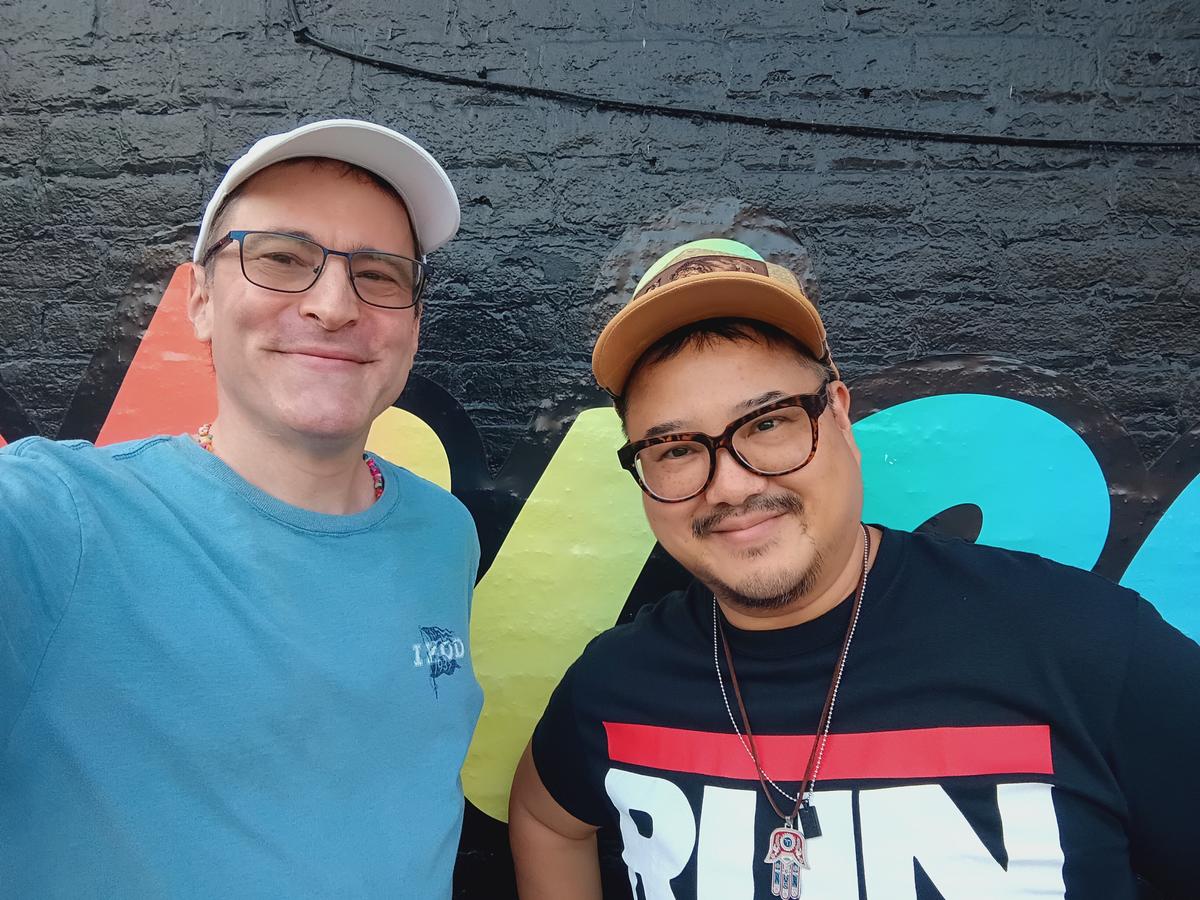
photo credit // michael oboza
Give Them Their Flowers is a series by Michael Oboza featuring mini profiles of regular people in the LGBTQ community
CHICAGO, ILL. -
By Michael Oboza, Special to GoPride.com
I am grateful to acknowledge a Filipino American creative thinker, entrepreneur and DJ by giving him his flowers. He shares joy supporting his community and no longer lives a lie, being his unapologetic and authentic self. Thank you Aaron Sager for honoring where you come from by sharing your own legacy.
He was born into a musical family, and music was always present.
"My grandfather played the cello and I took piano lessons as a child," Sager said.
"My mother and sister both have beautiful voices and sing. I've actually collaborated with both of them on tracks I've released on streaming platforms."
Sager was born in the Philippines and grew up in Chicago.
"I consider myself a Chicagoan with Filipino roots," Sager said.
"Some Filipino friends who were born and raised in the Philippines say I am too American and not Filipino enough. I always chuckle when I hear that. You can't help but be a product of your environment sometimes.
"It makes me think of the scene in 'Crazy Rich Asians' when before leaving for Singapore, Rachel's mother cautions her, 'You may have the face of a Chinese person. You may sound like a Chinese person. But in your mind and in your heart, you will never be the same as a Chinese person from China.'"
Living in Chicago, house music and hip-hop influenced his sound as a DJ and music creative.
"I deejayed at underground art parties and events with an artist collective called Fluxcore," Sager said.
"I played drums for a rock band called Wax Poetic. I enjoy being a part of the drum circle at the summer Full Moon Fire Jams. I love making music with community. I think it's a very sacred and amazing experience. I also produce music and have released singles and albums with vocal artists on most streaming platforms."
The thought of coming out was difficult.
"Before coming out, I felt constrained, like I couldn't fully express who I really was," Sager said.
"I felt like I couldn’t really be myself around my friends and family. I also felt like something was wrong with me because of the mentality around machismo men in my family. It felt like living a lie."
Coming out was a journey shaped by visibility, acceptance and resistance.
"On my dad's side of the family, there was a strong sense of machismo, and being gay was viewed negatively," Sager said.
"That made it difficult to imagine being open about who I was. In contrast, my mom created an environment where I felt supported and loved.
"On my mom's side of the family, I also had a gay cousin who performed in drag during the 1970s as a member of the Paper Dolls, a pioneering Filipino drag group. He later moved to Germany, where he built a successful career as an entertainer.
"Knowing that someone in my own family had lived authentically and found success was meaningful, even if I didn't fully appreciate its significance at the time."
Another profound influence was one of his mother's closest friends, a gay Black man she worked with.
"He was incredibly kind to me, and I learned so much simply by observing him," Sager said.
"When I was 13, he invited me to watch a television documentary about the experiences of gay Black people coming out. I remember being completely captivated by what I saw.
"Afterward, he quietly told me that if I ever wanted to talk, he would be there for me. At the time, I was still trying to understand my own feelings, and I remember thinking, 'What does he mean, if I ever want to talk?' Years later, I realized exactly what he meant.
“He had recognized something in me before I was ready to recognize it myself."
Personal reflection, awareness and acceptance happen over time.
"Looking back, many of my earliest influences in music, culture, and the LGBTQ community can be traced back to my mom's friend," Sager said.
"Through his vivid and colorful presence, compassion, and willingness to simply be there, he helped shape my understanding of identity, community, and the possibility of living authentically."
Self-expression flourished and coming out became enjoyable.
"After coming out, I felt free to embrace and live as my authentic self," Sager said.
"I made new friends and joined communities that were very supportive. A supportive environment really helped. My self-expression started to flourish and I began to embrace who I was without judgment. I was happier and more confident."
Self-love and honoring those who came before is a selfless and meaningful wisdom.
"Don't take for granted the freedom we have today or the people who fought, and continue to fight, for them," Sager said.
"Countless individuals have faced discrimination, violence, and even lost their lives so our community could live more openly and authentically. Honor their legacy by never forgetting where we've come from, loving yourself unapologetically, and always choosing love."
I am grateful to acknowledge a Filipino American creative thinker, entrepreneur and DJ by giving him his flowers. He shares joy supporting his community and no longer lives a lie, being his unapologetic and authentic self. Thank you Aaron Sager for honoring where you come from by sharing your own legacy.
He was born into a musical family, and music was always present.
"My grandfather played the cello and I took piano lessons as a child," Sager said.
"My mother and sister both have beautiful voices and sing. I've actually collaborated with both of them on tracks I've released on streaming platforms."
Sager was born in the Philippines and grew up in Chicago.
"I consider myself a Chicagoan with Filipino roots," Sager said.
"Some Filipino friends who were born and raised in the Philippines say I am too American and not Filipino enough. I always chuckle when I hear that. You can't help but be a product of your environment sometimes.
"It makes me think of the scene in 'Crazy Rich Asians' when before leaving for Singapore, Rachel's mother cautions her, 'You may have the face of a Chinese person. You may sound like a Chinese person. But in your mind and in your heart, you will never be the same as a Chinese person from China.'"
Living in Chicago, house music and hip-hop influenced his sound as a DJ and music creative.
"I deejayed at underground art parties and events with an artist collective called Fluxcore," Sager said.
"I played drums for a rock band called Wax Poetic. I enjoy being a part of the drum circle at the summer Full Moon Fire Jams. I love making music with community. I think it's a very sacred and amazing experience. I also produce music and have released singles and albums with vocal artists on most streaming platforms."
The thought of coming out was difficult.
"Before coming out, I felt constrained, like I couldn't fully express who I really was," Sager said.
"I felt like I couldn’t really be myself around my friends and family. I also felt like something was wrong with me because of the mentality around machismo men in my family. It felt like living a lie."
Coming out was a journey shaped by visibility, acceptance and resistance.
"On my dad's side of the family, there was a strong sense of machismo, and being gay was viewed negatively," Sager said.
"That made it difficult to imagine being open about who I was. In contrast, my mom created an environment where I felt supported and loved.
"On my mom's side of the family, I also had a gay cousin who performed in drag during the 1970s as a member of the Paper Dolls, a pioneering Filipino drag group. He later moved to Germany, where he built a successful career as an entertainer.
"Knowing that someone in my own family had lived authentically and found success was meaningful, even if I didn't fully appreciate its significance at the time."
Another profound influence was one of his mother's closest friends, a gay Black man she worked with.
"He was incredibly kind to me, and I learned so much simply by observing him," Sager said.
"When I was 13, he invited me to watch a television documentary about the experiences of gay Black people coming out. I remember being completely captivated by what I saw.
"Afterward, he quietly told me that if I ever wanted to talk, he would be there for me. At the time, I was still trying to understand my own feelings, and I remember thinking, 'What does he mean, if I ever want to talk?' Years later, I realized exactly what he meant.
“He had recognized something in me before I was ready to recognize it myself."
Personal reflection, awareness and acceptance happen over time.
"Looking back, many of my earliest influences in music, culture, and the LGBTQ community can be traced back to my mom's friend," Sager said.
"Through his vivid and colorful presence, compassion, and willingness to simply be there, he helped shape my understanding of identity, community, and the possibility of living authentically."
Self-expression flourished and coming out became enjoyable.
"After coming out, I felt free to embrace and live as my authentic self," Sager said.
"I made new friends and joined communities that were very supportive. A supportive environment really helped. My self-expression started to flourish and I began to embrace who I was without judgment. I was happier and more confident."
Self-love and honoring those who came before is a selfless and meaningful wisdom.
"Don't take for granted the freedom we have today or the people who fought, and continue to fight, for them," Sager said.
"Countless individuals have faced discrimination, violence, and even lost their lives so our community could live more openly and authentically. Honor their legacy by never forgetting where we've come from, loving yourself unapologetically, and always choosing love."