
The Great Gatsby may arrive wrapped in sequins, champagne shimmer and jazz-age excess, but Kyle Caress knows the real story of the show lives in the work beneath the surface.
As dance captain and swing on the North American tour of The Great Gatsby, Caress occupies one of the production's most demanding and revealing positions. He is both guardian and shape-shifter, responsible for maintaining the integrity of the choreography while also being ready to step into multiple ensemble tracks at a moment's notice. It is a job built on preparation, trust and a very specific kind of calm.
When we spoke with Caress ahead of the show's Chicago engagement, he returned again and again to the idea that for all of Gatsby's opulence, what audiences are really responding to is something more intimate.
"The connections between all of the performers really showcase the humanity," he said. "There's so much freedom for us to express ourselves and connect with each other on stage."
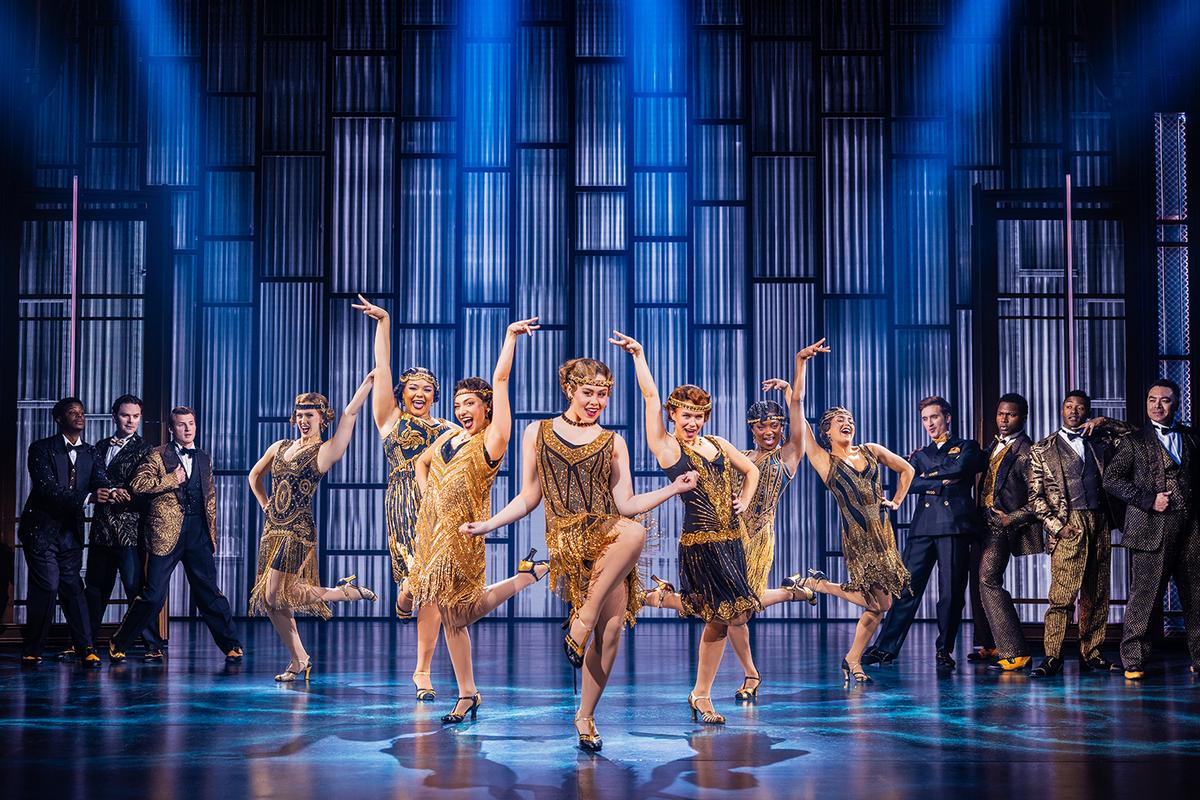
 Gatsby North American Tour; credit: Evan Zimmerman for MurphyMade
That may be the most surprising thing about this Gatsby. Yes, the show delivers the visual sweep audiences expect from a title this iconic. But Caress sees the humanity in the ensemble itself, especially in the moments that exist inside the choreography rather than outside it. He pointed to the balance between tightly set movement and improvisational freedom, particularly for the dancers, as one of the production's quiet strengths.
In the middle of all that spectacle, he said, there are fleeting interactions between performers that give the show emotional texture. For Caress, those moments are part of what makes the production feel alive.
His perspective is sharpened by the fact that he experiences the show from multiple vantage points. As a swing, he can be called on to cover seven different tracks, a responsibility that changes not only his performance but his relationship to the stage itself.
"Depending on the night, I could be one of seven various people in the show," he said. "One night I might be downstage center the entire time, and then the next day I'm in a different role and get to see the entire stage from a completely different angle."
That unpredictability is part of the thrill, but it also requires discipline. Caress described swing life as a mix of repetition, homework and routine. A good breakfast, body prep and some kind of centering ritual all matter, especially when the possibility of going on for anyone is always present. Sometimes that means a walk. Sometimes it means music or a podcast. The point is to stay mentally ready without getting swallowed by the pressure.
His role as dance captain asks for a different but equally nuanced form of leadership. Beyond making sure everyone knows the counts and spacing, Caress said much of the work is about preserving style. Dominique Kelley's choreography for The Great Gatsby does not live in a single movement vocabulary. Instead, it pulls from musical theater, swing partnering, hip hop, house and voguing, among other influences.
"A lot of our notes end up being style notes," Caress said. "We'll say this moment should feel like Janet Jackson at the VMAs, and that completely informs how someone would do a step. Then in the next number we'll say it's inspired by old-way ballroom culture."
That kind of note does more than sharpen performance quality. It grounds the choreography in history and reference, asking performers to understand not just what they are doing but where that movement language comes from. In Caress' telling, the job of dance captain is as much about honoring lineage as it is about preserving synchronization.
Caress has seen firsthand how powerfully the show travels. Having performed with The Great Gatsby on Broadway and in Korea before joining the national tour, he has watched audiences connect with the material across very different cultural contexts. In New York, he saw fans arrive in flapper looks and even mirror viral choreography from their seats. In Korea, he was struck by how deeply audiences responded to the story's emotional core.
Though Fitzgerald's novel is often treated as distinctly American, Caress said the musical's themes reach much further than that. Love, longing and ambition translate. So does the ache inside reinvention.
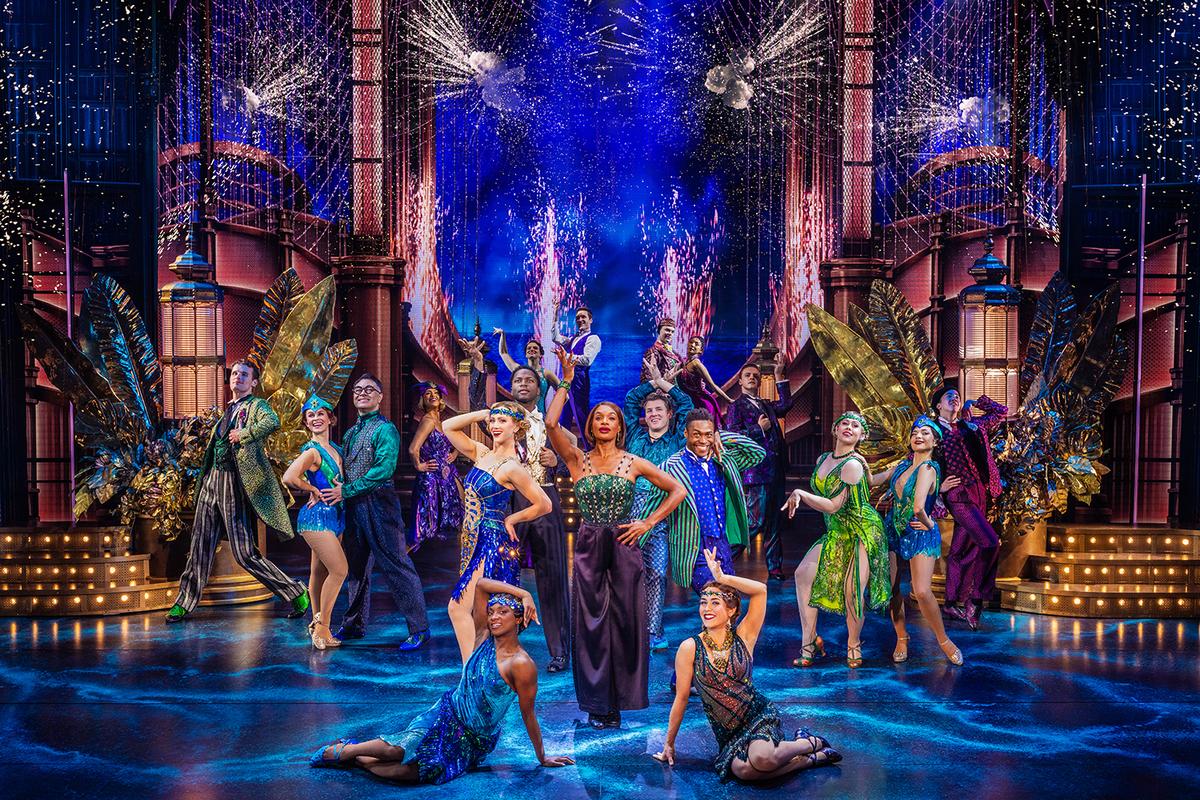
 First National Touring Company of THE GREAT GATSBY; credit: Evan Zimmerman for MurphyMade
That idea of reinvention resonates in a particularly meaningful way for LGBTQ+ audiences, and Caress spoke candidly about how the production has created space for queerness and fluid self-expression. In many musicals, he noted, gender presentation can feel rigidly defined. Here, he said, the creative team intentionally made room for a wider emotional and physical vocabulary.
"There's so much freedom to have moments of both sides and to really express yourself," he said. "If someone woke up and felt like they wanted to dance super grounded and more masc, then the next day they could feel a little softer and want to express that softness on stage. There's so much space for both of those."
For Caress, that freedom is not incidental. It is one of the production's deepest gifts. He also pointed to the ways the show allows for varied pairings and relational dynamics within the ensemble, choices that acknowledge queerness not as a modern add-on but as something that has always existed, even within the world of the Roaring Twenties.
That clarity about expression and identity feels connected to the larger ethos Caress brings to his career. Originally from Indiana, he grew up singing, joined show choir during the height of the Glee era and had a pivotal realization after seeing Newsies on Broadway as a teenager.
"I remember seeing so many incredible dancers and thinking, wait, I could do this as a job," he said.
He eventually studied musical theater and moved to New York, carrying with him a piece of advice that still shapes his approach: "Hard work beats talent when talent doesn't work hard."
It is a simple line, but in Caress' hands it becomes something fuller. Talent matters, of course, but so do generosity, consistency and the ability to keep learning. Asked what young dancers need for longevity, he emphasized openness as much as drive.
"The most important thing that has helped me has been having an open mind and knowing that you are always a work in progress," he said.
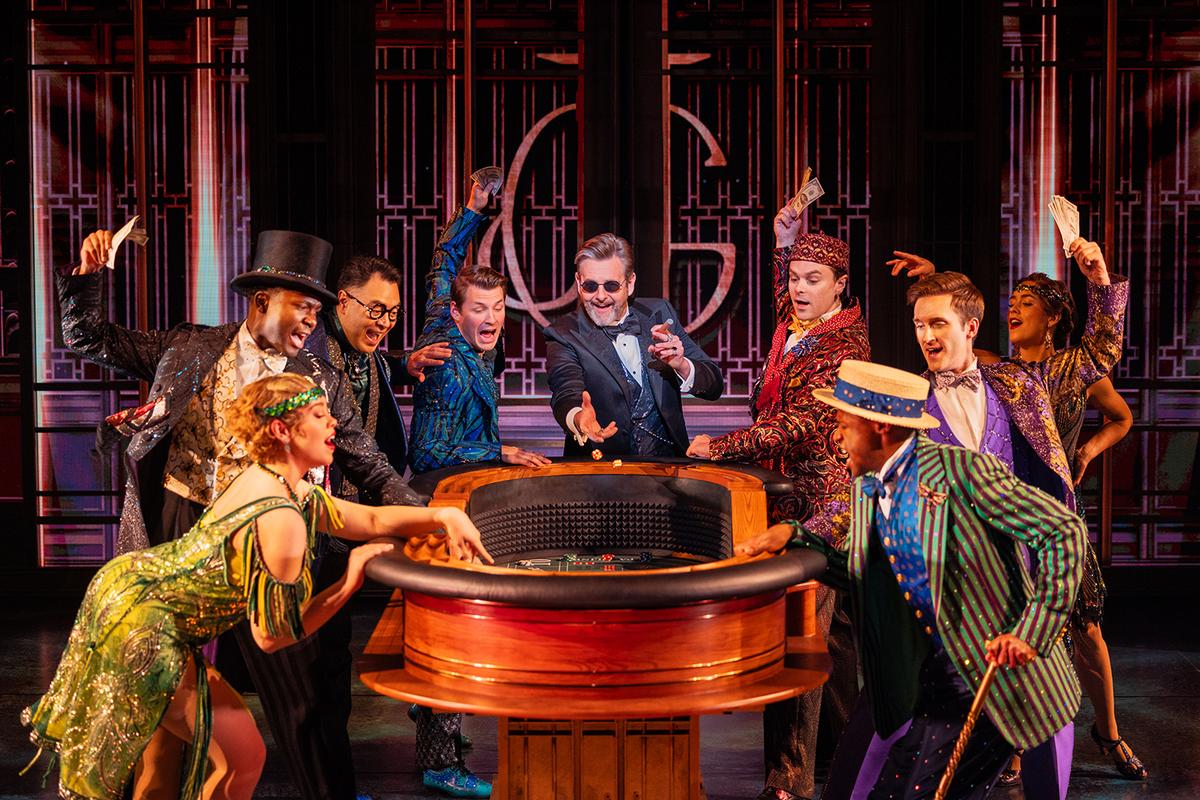
 The First National Touring Company of THE GREAT GATSBY; credit: Evan Zimmerman for MurphyMade
That mindset feels especially apt for a performer whose job is built on adaptation. In a production as lush and high-profile as The Great Gatsby, Caress is helping hold together the details most audiences will never fully see: the style notes, the transitions, the backup plans, the chemistry, the human current running under the polish.
If Caress is any indication, The Great Gatsby arrives in Chicago with more than visual splendor. It comes with a company deeply invested in craft, connection and the emotional life inside the spectacle.
The North American tour plays Broadway In Chicago's Cadillac Palace Theatre from April 21 through May 3. Single tickets are on sale now, with prices ranging from $49 to $160, subject to availability and additional fees for online purchases. For more information, visit Broadway In Chicago.