CHICAGO, ILL. -
This Sunday on Meet the Press, former Chicago Mayor and diplomat Rahm Emanuel sat down with Kristen Welker and made it crystal clear: he believes America is ready to elect its first Jewish president. Tossed into the mix with a sudden wave of national media appearances and cross-country speeches, the writing on the wall spells out a potential 2028 White House bid. When asked about his faith and the state of the nation, Emanuel didn’t flinch, telling viewers, "If my faith is a problem for you, don’t vote for me."
As a presidential election watcher tracking every shake-up in the primary race, my eyes immediately went to how this positions him—not just nationally, but specifically with our community here on GoPride.com. If Emanuel is eyeing a run to lead the Democratic Party, we need to take a hard look at his track record on LGBTQ issues, where he might trip up with our voters, and why heavyweights like Robert Reich are already sounding the alarm.
Looking back: Emanuel’s record on LGBTQ issues
To be fair to Emanuel’s legacy in public office, he wasn't absent on our issues. During his time as mayor of Chicago, his administration backed a bunch of inclusivity initiatives, stood publicly with marriage equality, and pushed for targeted public health outreach aimed at LGBTQ residents. City structures under his watch also updated policies regarding transgender health care coverage.
Yet, looking at the bigger picture of his political evolution—from his early days as a Clinton operative to his time as Obama's chief of staff and mayor—Emanuel has always styled himself as a pragmatic, hard-knuckles centrist rather than an ideological culture-warrior. Lately, he’s been openly advising fellow Democrats to dial back on identity-heavy battles and school bathroom debates, urging candidates to laser-focus instead on core academics and the economy to win back working-class trust.
The weak spots: Why LGBTQ and progressive voters might balk
While his economic centrism has long alienated the progressive wing of the party, his cultural advice poses real hurdles for LGBTQ voters:
The "too cautious" playbook: Advising Democrats to step away from active defense of identity politics and school-based protections makes many in our community deeply uneasy. When civil rights and representation are under continuous attack, "toning it down" sounds less like strategy and more like abandonment.
The establishment brand: Emanuel is the ultimate insider of the D.C. and corporate establishment. His sharp rejections of bold progressive mainstays like "Medicare for All" and the "Green New Deal" put him right at odds with younger, more progressive queer voters who see economic justice and LGBTQ liberation as tied together.
A combative history: Let’s not forget his turbulent years in Chicago. His sharp-elbowed, take-no-prisoners political style left deep scars across various groups in the city, creating lingering doubts about how he handles pushback and listens to grassroots communities.
Robert Reich’s verdict: A "big mistake"
Emanuel’s looming shadow hasn't gone unnoticed by longtime party thinkers. Weighing in on the prospective 2028 field, former Labor Secretary Robert Reich issued a sharp warning, framing Emanuel as emblematic of everything tired, elite, and establishment-driven that alienates working-class Americans. Reich didn't mince words, making it clear that a Rahm Emanuel candidacy would be a big mistake for the Democratic Party—pushing a status-quo blueprint at a time when voters want real empathy and bold vision.
The bottom line for 2028
Rahm Emanuel wants to frame his potential campaign around toughness, economic pragmatism, and unyielding self-assurance. But as the 2028 primary cycle slowly gets moving, LGBTQ voters and progressives will have to decide: do we want a throwback to the corporate-friendly establishment of the past, or does our party need a real evolution?
If Emanuel thinks his biggest hurdle is getting people to accept a Jewish president, he might be misreading the room. For our community, the question isn’t about his faith—it’s about whether a politician who built his career on compromising away the edges has any real fight left for our rights.
Rahm Bomb: An LGBTQ wariness over ex-mayor's presidential ambitions
Mon. October 5, 2026 7:14 PM by Gerald Farinas
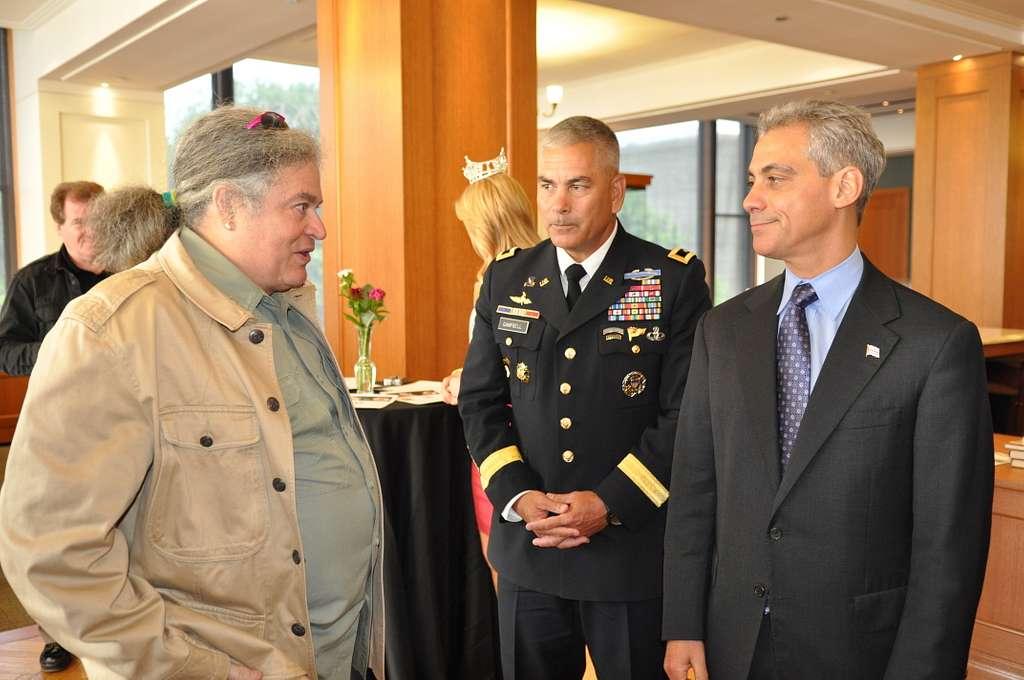
photo credit // national archives. public domain.