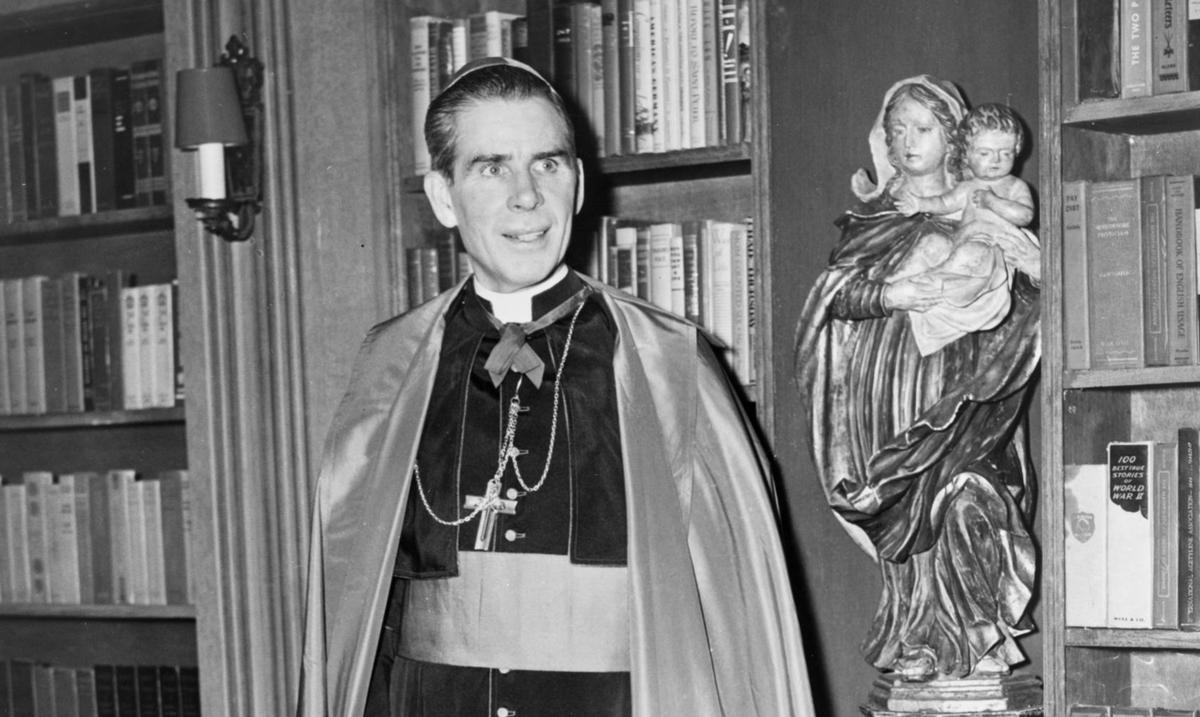
CHICAGO, ILL. -
Back in the 1950s, Archbishop Fulton J. Sheen was a total media darling. He was one of the first televangelists. The smooth-talking religious leader brought Catholic doctrine straight into living rooms nationwide via his TV show, "Life Is Worth Living," and even snagged an Emmy Award for his efforts.
Now, the Roman Catholic Church is officially beatifying Sheen, moving him one major step closer to full sainthood.
For those outside the Catholic tradition, beatification is the formal process where the Pope declares a deceased person to be "Blessed" after a thorough investigation into their life and virtues, officially authorizing local or regional veneration and clearing the path for eventual canonization as a saint. But for the LGBTQ community and folks who care about gender equality, this celebration raises a pretty hard question: What kind of legacy are we actually being asked to cheer for?
Sheen was a master communicator of mid-20th-century religious conservatism. Long before modern culture wars took over today's headlines, he was laying the groundwork.
In his lectures and writings, he regularly painted secular culture as morally bankrupt, pointing right at shifting social norms and queer identities as signs of societal decay. To Sheen, traditional morality meant a rigid gender binary and a sexual ethic that treated anything outside of procreative, straight marriage as a major moral failure.
These stances aren't really surprising given the institution honoring him. The Catholic Church remains super adamant that, even though biological sciences show homosexuality is totally natural, it'll still classify same-gender attraction and sexual acts as intrinsically evil. Sheen was just echoing and amplifying that rigid dogma.
On top of that, Sheen's worldview wasn't limited to his anti-LGBTQ theology; it ran deep into how he viewed women, locking half the population into domestic boxes.
Sheen famously claimed that "the level of any civilization is the level of its womanhood," framing women not as independent agents with their own minds, but as passive vessels of intuition and sacrifice.
He contrasted this right against male "initiative and intellect," pushing women into a romanticized traditional sphere where their main job was being domestic and spiritual support systems.
When the most famous religious institution elevates a guy like Sheen to "Blessed" status, it sends a powerful message. It tells the faithful that his whole body of work, including his active stigmatization of queer lives and his patriarchal view of women, is worthy of universal honor.
For the LGBTQ community and our allies, Sheen's beatification is a stark reminder that some religious groups are still eager to make saints the architects of our exclusion.
As the Catholic Church (and some Protestants) celebrates him this week, let's refuse to sanitize his record. Celebrating a figure who built his moral authority on condemning queer existence and confining women isn't a step toward grace. It's a step backward.
At the same time, it's crucial to remember that not all Christianity shares Sheen's narrow views.
As a commissioner serving in the Presbyterian Church (U.S.A.), I see a completely different expression of faith firsthand. Our denomination fully welcomes LGBTQ inclusion into all levels of leadership and proudly proclaims a Gospel of celebration, embracing the truth that LGBTQ people are born this way.
Televangelist Fulton Sheen closer to sainthood; anti-LGBTQ, criticized women
Thu. September 24, 2026 7:02 PM by Gerald Farinas
photo credit // wikimedia commons